
Are Feature Walls Out Of Fashion?

If you've spent any time looking for decorating inspiration online, you've probably noticed that feature walls have had quite the rollercoaster ride. One year, they're everywhere. The next, they're declared hopelessly dated.
Then somebody paints a single wall olive green, adds some timber slats and suddenly they're back again under a different name. It can leave homeowners wondering whether feature walls are a decorating classic or something best left in the early 2000s.
My answer is probably less exciting than you were hoping for. I don't think feature walls are either in or out of fashion. They've simply evolved, and the more interesting question is whether your room actually needs one in the first place. Because, despite the name, a feature wall and a focal point are not the same thing, and understanding that difference usually leads to much better decorating decisions.
A feature wall and a focal point are not the same thing.
Why Feature Walls Became So Popular
Feature walls didn't become popular by accident. They offered an easy way to introduce colour and personality without committing to an entire room. Painting one wall deep burgundy, charcoal or chocolate brown felt far less intimidating than painting all four, particularly at a time when neutral walls dominated most homes.
It was also an affordable weekend project. A single tin of paint could completely change the feel of a room without replacing furniture or renovating anything, so it's hardly surprising that feature walls became one of the biggest decorating trends of the early 2000s.
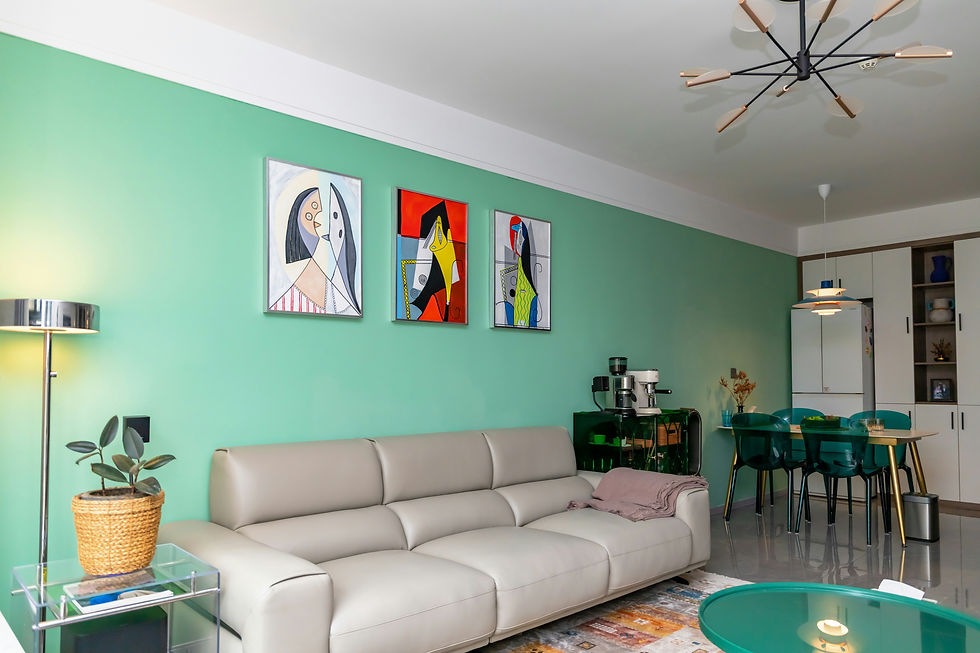
Somewhere along the way, feature walls stopped being one decorating option and became the decorating option. If a room felt a little plain, the answer was often to paint one wall a different colour, whether the room actually benefited from it or not.
A Feature Wall Is Not A Focal Point
One of the biggest misconceptions is that every room needs a feature wall. In reality, what every room benefits from is a focal point, but the two are not interchangeable.

A focal point is simply the place your eye naturally lands when you walk into a room. It gives the space direction and helps everything else feel organised around it. Sometimes that focal point is created deliberately. Sometimes the room already has one without you needing to do anything at all.
A fireplace naturally draws attention. So does a beautiful view, an impressive headboard, original architectural details or a striking piece of artwork. In those cases, painting one wall a contrasting colour can actually compete with the very thing that already makes the room interesting. Instead of strengthening the room, it can unintentionally split your attention between two competing features.

Some Of The Best Feature Walls Weren't Planned
When people hear the words "feature wall", they often picture a single painted wall in a bold colour. While that is certainly one option, it is probably the least interesting one.
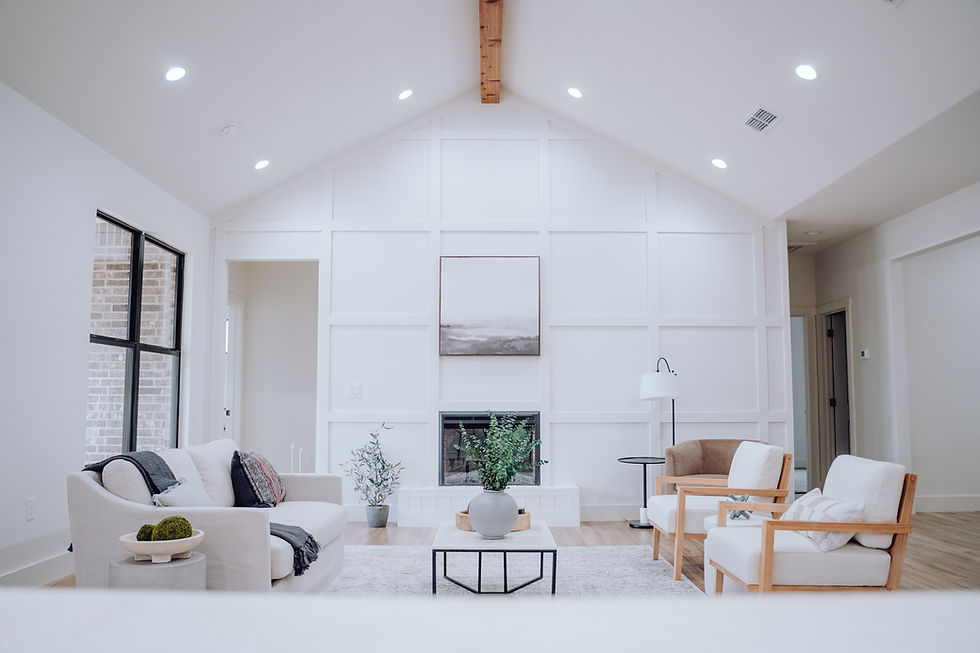
Some of the most successful feature walls are created through texture rather than colour. Wallpaper, timber panelling, exposed brick, limewash, stone, built-in shelving or beautifully detailed joinery all create visual interest without relying on contrast alone. The wall feels special because there is something genuinely worth looking at, not simply because somebody opened a different tin of paint.

Some of the best feature walls probably weren't designed as feature walls at all. They simply evolved into the natural focal point of the room because of the architecture, the materials or the craftsmanship, which is exactly why they feel effortless rather than forced.
Sometimes A Feature Wall Is About Confidence
There is a reason feature walls became so popular, and I don't think it was because people genuinely believed one painted wall always looked better than four.
For many people, it simply feels safer.
Painting one wall deep green or covering a single wall in patterned wallpaper is a much smaller commitment than doing the entire room. Three walls remain a safety net if the bold choice turns out to be a mistake.
I completely understand that way of thinking because I did exactly the same thing myself. Around twenty-five years ago, my first living room had a single fire-engine-red feature wall. At the time, I thought it looked fantastic. Looking back now, I cringe a little every time I remember it. Not because feature walls are automatically a bad idea, but because I was using one as a way of being adventurous without fully committing to the room.
That is probably why I have a soft spot for feature walls. Most of them aren't the result of bad decorating. They're the result of somebody trying to be a little braver than they were the week before. Sometimes that is exactly the right decision.

At the same time, it is worth asking yourself whether the feature wall is genuinely improving the room or simply protecting you from making a decorating choice that might actually have produced a stronger result. More often than people realise, painting all four walls creates a calmer, more cohesive space than stopping after the first one.
"A feature wall often becomes a way of introducing colour while keeping three walls as a safety net."
The Question I Always Ask Is, "Why That Wall?"
Whenever someone asks me whether they should create a feature wall, I always come back to the same question.
Why that wall?
It sounds obvious, but it is surprising how often there isn't a clear answer. Sometimes the chosen wall is simply the first one you see when you walk into the room. Sometimes it is the easiest one to paint. Very often, it is simply the television wall because that's what everyone else seems to do. The trouble is that a television isn't automatically the thing you want people's attention drawn towards, particularly when it's switched off and becomes a large black rectangle.
If the wall contains the bed, a fireplace or a beautiful architectural feature, the decision usually makes perfect sense because those elements already deserve attention. If it is simply a blank wall at the end of the room with nothing particularly happening there, adding a darker paint colour does not automatically make it more interesting.
The best feature walls support something that already deserves to be the focus, rather than trying to invent one from scratch.

Sometimes The Whole Room Deserves The Attention
One reason feature walls have become a little less common is that decorating has shifted away from creating contrast for the sake of it.
Colour drenching has become increasingly popular, with walls, ceilings, woodwork and sometimes even radiators painted in the same colour. Rather than asking one wall to carry the entire design, the whole room works together to create atmosphere.
The same can be said for layered interiors that rely on beautiful lighting, textured fabrics, carefully chosen furniture and natural materials instead of one dramatic painted wall. Interest comes from the room as a whole rather than being concentrated in a single spot, which often creates a more balanced and sophisticated result.
That does not mean colour drenching is automatically the better choice. It simply demonstrates that there are many different ways to create a room that captures your attention without relying on a single contrasting wall.

So, Are Feature Walls Out Of Fashion?
I don't think so.
The random feature wall that exists simply because one wall looked a bit empty has largely had its day. Feature walls that celebrate beautiful architecture, introduce texture or reinforce a room's natural focal point haven't gone anywhere. If anything, they've become more thoughtful than they were twenty years ago.
Perhaps that's why the question isn't really whether feature walls are fashionable. It's whether your room already has something worth drawing attention to. Once you start thinking about focal points instead of feature walls, decorating decisions become much clearer, and you may even discover that your room never needed a contrasting wall in the first place.


