
Interior Design Decisions That Matter More Than Furniture

Furniture gets all the attention. It is the part people enjoy most. The scrolling, the saving, the screenshots sent to friends, the quiet conviction that this one piece will somehow pull the whole room together.
And yet, when people feel disappointed with their home a year or two later, it is almost never because of the sofa. It is because of everything around it.
Most long-term frustration in interiors comes from decisions that felt dull at the time. The ones made early, quickly, and often without much discussion because they did not seem very exciting. Layouts. Lighting. Surfaces. Circulation. These choices quietly shape daily life in ways furniture never quite can.

Layout Decides How You Live
Before colour, before furniture, before style, there is layout. How you enter a room. Where you naturally walk. Where you pause without thinking about it.
A sofa can be beautiful and still be in the wrong place. Chairs can look perfect and still block the path everyone takes. Dining tables can technically fit and yet make every meal feel slightly cramped. These things do not scream for attention, but they create low-level friction that shows up every single day.
Good layouts tend to disappear once they are working. You stop noticing them because nothing is getting in the way. Bad layouts, on the other hand, make themselves known constantly, usually through small irritations you cannot quite put your finger on.

Lighting Shapes Mood Long Before Furniture Does
Lighting is often treated as a technical requirement rather than a design decision. One ceiling light per room, a few downlights where required, and that feels like a sensible box ticked.
In reality, lighting shapes how a home feels far more than most furniture ever will. It determines where you sit in the evening, how long you stay in a room, and whether a space feels calm or vaguely unsettling once the sun goes down.
A room with good lighting feels forgiving. You can move around, settle in, change position. A room without it can feel oddly tiring, even if everything in it looks good on paper.

Surfaces Dictate Behaviour
Floors, walls and worktops do not usually get the same emotional investment as furniture, but they influence behaviour in very real ways.
A floor that shows every mark encourages careful movement. A worktop that stains easily makes people anxious about using it properly. A wall colour that constantly feels slightly wrong never fully fades into the background.
People often regret surface choices not because they look bad, but because they ask too much of daily life. Over time, that quiet effort becomes exhausting.
Circulation And Storage Set The Tone
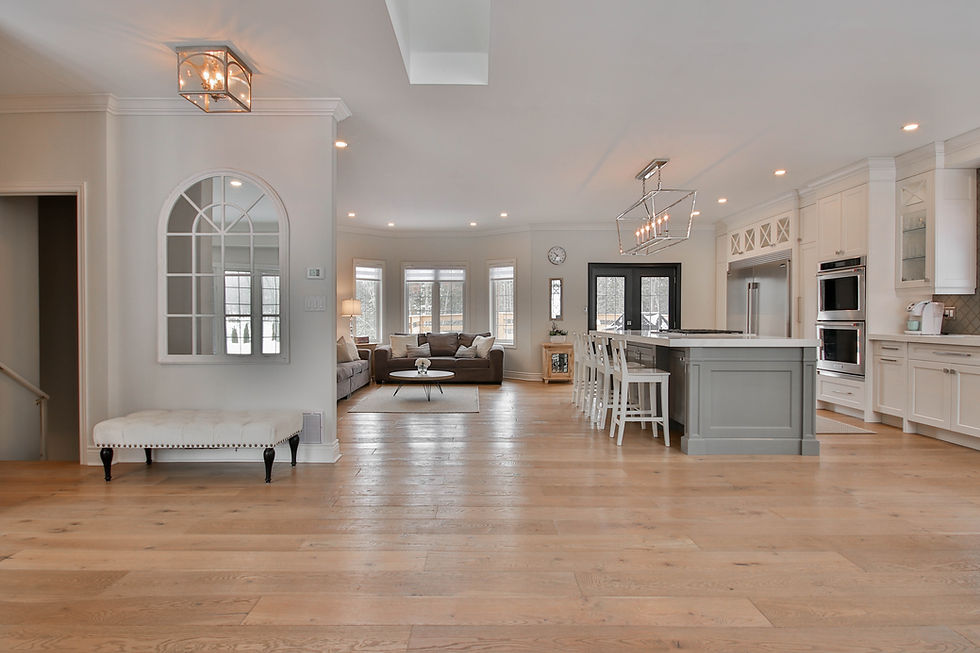
How people move through a space, and where things naturally land, has a bigger impact on calm than almost any decorative choice.
When circulation works well, rooms feel generous even when they are not large. When storage aligns with behaviour, tidying feels almost effortless. When either one is off, the house constantly asks for small corrections. Move this. Put that away. Step around here. These are not dramatic problems, but they are relentless ones.

Proportion Rarely Gets The Credit It Deserves
Proportion is one of those topics nobody gets excited about, which is unfortunate because it matters enormously.
A well-proportioned room will tolerate almost any style choice. A poorly proportioned one will struggle no matter how current the furniture is. Oversized pieces in small rooms, under-scaled furniture in large spaces, or too many similarly sized items competing for attention all create tension that styling cannot fix.
When proportion is right, rooms feel settled. When it is not, something always feels slightly off.

Why These Decisions Are Easy To Overlook
These decisions tend to be made early, often before people have properly lived in a space and understood how it behaves over the course of a normal week. They are made to keep momentum going, to tick things off a list, and because they feel technical rather than emotional.
There is also very little instant reward. Choosing a sofa feels exciting. Deciding where a light switch should go does not. And yet, those quieter choices are the ones you live with most intensely. They shape how a home functions long after the novelty of new furniture has worn off.
When regret shows up later, it is rarely dramatic. It arrives as a series of small frustrations that could have been avoided if more time had been spent on these early, unglamorous decisions.

A Home Is Built In Layers
A home does not come together all at once. It is built in layers, each one supporting the next.
When layout, lighting, surfaces and circulation are well considered, furniture has the freedom to be expressive. It can be chosen for character rather than compensation. It can add personality without being asked to fix structural problems.
When those foundational layers are weak, furniture is expected to do far more than it should. Sofas are blamed for awkward layouts. Rugs are used to soften proportions. Lamps are added to correct poor lighting. These fixes rarely solve the underlying issue, they simply mask it.

Practical Ways To Get This Right
All of this sounds very reflective, but there are a few very practical ways to avoid getting stuck later.
Before buying furniture, spend time walking the space and noticing where you naturally move, stop and turn. If you keep bumping into corners or walking around furniture, the layout needs adjusting before anything else is added.
Plan lighting based on activities rather than symmetry. Ask yourself where you read, where you sit in the evening, where you cook and where you tend to stand while talking. Add light to those spots first, and only then think about how it looks as a whole.
When choosing surfaces, imagine an average weekday rather than a styled photo. Ask what will spill, what will be touched most, and what will need cleaning often. If a material makes you nervous to use it properly, it is probably not the right one.
Treat storage as a response to behaviour, not a correction. Notice where things actually land and work backwards from there, even if that means breaking a few design rules.
Finally, leave some decisions open. Not everything needs to be fixed immediately. Living with a space for a while will often tell you far more than any plan ever could.

Where To Put Your Energy
If you want a home that works long-term, shift more of your attention to the decisions that quietly shape daily life.
Layout, lighting, circulation and material choices rarely get the excitement they deserve, but they determine how easy a home is to live in. Furniture can always change. These decisions are far harder to undo.
When the foundations are right, everything else becomes simpler. And that is usually the point where people realise the sofa was never the problem.


