
The Difference Between Flatweave, Kilim, Persian, Berber And All The Other Rug Words

Rugs have somehow developed their own language. You start off innocently looking for something “warm and neutral”, and within twenty minutes, you are knee-deep in phrases like low pile, hand tufted, vintage wash, flatweave, loop pile and distressed finish.
Half the time, the product photos are no help either because every rug online seems to live inside the exact same beige living room with a bouclé chair and an olive tree that has never seen actual daylight.
Meanwhile, you are trying to work out whether the thing is soft, scratchy, practical, washable, worth the money, or destined to shed fibres into your coffee for the next six months.

The confusing part is that rug names do not all describe the same thing. Some refer to the weaving technique, some to the material, some to the country or region they originate from, and others are basically just a style description dressed up to sound more expensive.
After a while, you realise you are comparing completely different categories without knowing it. A kilim is not the same thing as a wool rug. A Persian rug is not automatically antique. Bouclé is a texture, not a weaving region. And “vintage style” can mean absolutely anything from genuinely beautiful to suspiciously printed-on distressing that looks like someone spilled diluted tea over it on purpose.
This is also by no means an exhaustive rug dictionary because frankly, we would all be here for three business days. Rugs get categorised by material, weaving technique, origin, texture, construction and visual style, often all at once, which is exactly why the terminology gets confusing so quickly.
This is simply a breakdown of the terms that seem to appear most often once you start rug shopping online and suddenly realise everybody is speaking fluent carpet.

Flatweave Rugs
Flatweaves are usually the rugs people end up appreciating more after they have lived with rugs for a while. They do not have a thick pile, which means they sit flatter to the ground and feel less bulky in a room. Dining chairs move over them more easily, vacuuming does not become an upper-body workout, and they generally create a more relaxed look than those ultra-plush rugs that seem lovely until somebody drops crisps into them. They also work very well in layered interiors because they do not visually dominate everything around them.

A lot of flatweaves have a slightly casual feel that works beautifully in homes that are not trying too hard. They crease less dramatically, often age well, and tend to suit older homes particularly nicely because they do not feel overly polished.

The only downside is that they are not the rugs people collapse onto after a long day, declaring it “like walking on clouds.” Some can slide around a bit as well, especially lighter cotton versions. Nothing says glamour quite like aggressively kicking your rug back into place every morning because the dog has sprinted across it at full speed again.
Kilim Rugs
Kilim gets used as a catch-all term online now, which is slightly unfair because proper kilims have a very specific woven construction and history behind them.
Traditionally, they are flat-woven rugs originating from regions like Turkey, Iran and other parts of the Middle East and Central Asia. They often feature geometric patterns, earthy colours, and detailing that feels collected rather than showroom-perfect. Even newer kilim-inspired rugs still carry that layered, travelled feel that instantly makes a room feel less staged.

They are also surprisingly versatile. Kilims work in contemporary homes far more easily than people expect because the patterns tend to add warmth without making everything feel overly traditional.
A good kilim has movement. The colours rarely match perfectly, the motifs feel slightly irregular, and that is exactly why they work.

Rooms usually become more interesting once something slightly imperfect enters the mix. Otherwise, everything starts looking like it arrived in the same delivery van on the same day.
Persian Rugs
Persian rugs have survived every trend cycle imaginable for a reason. Even in homes filled with cleaner lines and more contemporary furniture, a Persian rug usually makes the entire room feel richer and more grounded. The detailing draws your eye in without screaming for attention, and the colours often have a softness that newer rugs struggle to imitate properly.

Good ones do not look flat. There is depth to them, variation in the dyes, slight fading in places, and that layered look that newer machine-made rugs try very hard to copy.
There is also a massive difference between a genuine Persian rug and a “Persian-style” rug from a large retailer, although honestly, that does not mean the latter cannot still look good.

Not everybody is hunting down antique heirloom pieces at auctions while wearing linen trousers and discussing craftsmanship over espresso. Some newer interpretations are beautiful in their own right and work far better for busy family homes where red wine incidents are less a possibility and more an inevitability.
The important thing is usually less about authenticity and more about whether the rug has depth, texture and colours that feel believable rather than oddly printed-on.
Berber Rugs
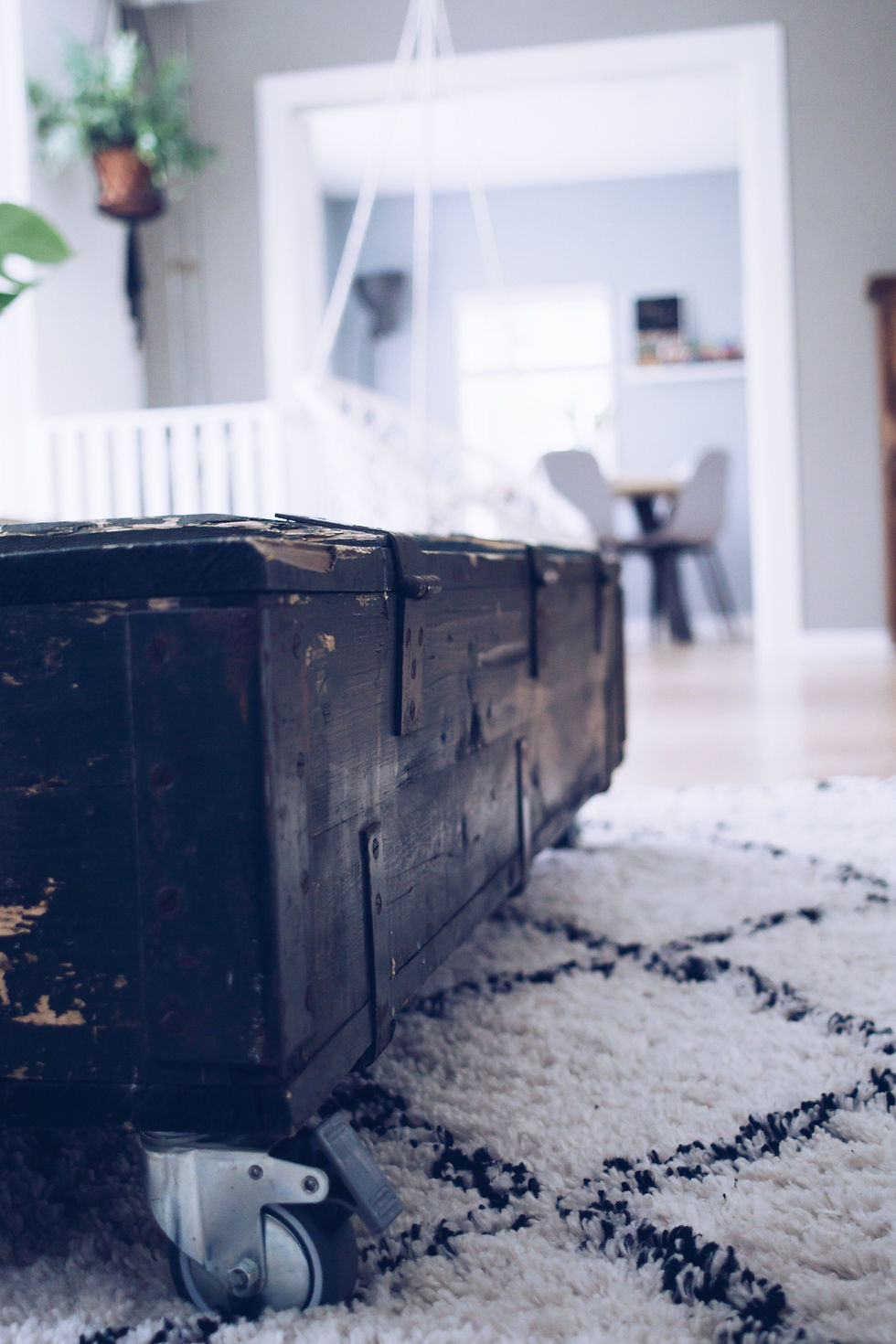
Berber rugs had a serious moment online and somehow managed to survive it, which says quite a lot. Usually, when interiors become that heavily photographed, they end up feeling tired fairly quickly. But Berber rugs still work because they are textural without being visually chaotic.
The neutral tones make them easy to live with, and the darker linear patterns break up large areas of cream or beige without making a room feel busy.

A lot of the rugs sold as “Berber style” today are simply inspired by traditional Moroccan rugs rather than genuinely handmade Berber pieces, and there is a fairly wide spectrum in quality. Some have beautiful texture and softness, while others feel slightly like an oversized bath mat having an identity crisis.
The thicker pile also changes how a room sounds and feels. Rooms with harder surfaces often benefit from that softness because it absorbs a bit of the echo and sharpness. Spaces start feeling calmer once there is something substantial underfoot, even if nobody consciously notices why.
Bouclé Rugs
Bouclé has escaped furniture and fully entered rug territory now. Everything seems determined to become textured and slightly nubby lately.
Bouclé rugs tend to work best in calmer interiors where the focus is more on texture than heavy contrast or pattern. They usually sit within that soft contemporary palette of oat, cream, sand and mushroom tones that interior brands are currently extremely attached to.

The thing about bouclé rugs is that they photograph incredibly well. They add depth without overwhelming a room, and they soften harder finishes beautifully.
In real life though, they can become enthusiastic collectors of crumbs, dust and mysterious fluff that appears from nowhere.
They are not high-drama rugs, but they are high-maintenance enough that you want to think carefully before placing one underneath a dining table where somebody eats toast twice a day. Texture is lovely until you are crouched over it with a handheld vacuum, questioning your life choices.

Jute, Sisal And Natural Fibre Rugs
Natural-fibre rugs get lumped together constantly, even though they all behave quite differently.
Jute is usually softer and slightly more relaxed-looking, which is why people often use it in living rooms and bedrooms where they still want some warmth underfoot.

Sisal tends to be rougher, more structured and more durable, which makes it practical but not exactly the rug equivalent of luxury bedding.

Seagrass sits somewhere in between with a smoother finish and a slightly more coastal feel.

These rugs are brilliant for adding texture because they instantly stop a room from feeling too flat or polished. They also pair well with vintage furniture, linen fabrics, wood tones and older homes because they bring in something earthy that balances cleaner finishes.
The downside is that they are not particularly forgiving when it comes to moisture or stains. A natural-fibre rug after a full glass of red wine has been launched across it is not entering its strongest era.
They are also not the rugs people tend to sprawl across while watching films for four hours straight. Beautiful, yes. Cosy in a sink-your-feet-into-it way, not always.
Shaggy Rugs
Shaggy rugs never fully disappear. They retreat for a while, gather themselves emotionally, and then come back in another form. Deep-pile rugs do make spaces feel softer and warmer, especially in bedrooms where nobody particularly wants to step onto a cold, hard floor first thing in the morning. They absorb sound well and can make a room feel more relaxed almost instantly.

The reality, though, is that they require commitment. Crumbs disappear into them like they have entered another dimension, and vacuuming becomes a very personal relationship.
Some flatten quickly, some shed constantly, and some develop those strange flattened walking paths that suddenly reveal exactly where everybody walks every day.
Still, when done well, they can make a room feel genuinely inviting instead of overly styled. There is a reason people still buy them despite the maintenance drama.

Wool Rugs
Wool rugs are usually the point where people suddenly understand why rugs can become expensive. Wool holds colour beautifully, tends to age well, and has a softness that synthetic fibres rarely manage to imitate properly. It also has natural durability, which matters more than people realise once furniture starts moving over it daily and life begins happening on top of it. A good wool rug often improves with age instead of looking tired after a year.

They also have a richness that is difficult to fake. Even simpler wool rugs tend to have depth in the fibres and subtle variation in tone that makes them feel more elevated. Synthetic rugs can sometimes look oddly flat in comparison, especially under natural light.
The downside, naturally, is price. Once you start looking at proper wool rugs, you quickly understand why people suddenly begin describing rugs as “investment pieces” while trying not to look alarmed at the cost.

Viscose Rugs
Viscose rugs are the heartbreakers of the rug world because they look absolutely beautiful at first glance. They have that soft sheen that catches the light beautifully and makes a room feel elegant very quickly. In photographs, they often look expensive and luxurious, which is exactly why so many brands use them in styled interiors online.

The problem is that real homes are less controlled environments than catalogue shoots. Viscose marks quite easily, struggles with moisture, and can start looking worn faster in high-traffic areas. That does not mean they are terrible rugs. It just means they work better in certain spaces than others.
A formal sitting room that gets used twice a month is a very different situation from a hallway where people storm in during Dutch winter weather carrying wet shoes and questionable life decisions.
Placement matters more than people think with rugs.
Hand Knotted, Hand Tufted And Machine-Made Rugs
These terms get thrown around constantly and are worth understanding because they affect both price and durability quite dramatically.
Hand-knotted rugs are made knot by knot, which takes an enormous amount of time and skill. They tend to last for decades, sometimes generations, and often become more beautiful as they age. That craftsmanship is part of why they cost what they do.

Hand-tufted rugs are quicker to make because fibres are punched into a backing rather than individually knotted. They can still look lovely and feel substantial, but they generally do not have the same lifespan.

Machine-made rugs are the most affordable and accessible option, and, honestly, some are now surprisingly good visually. The quality gap has narrowed massively over the years. Still, once you see a genuinely well-made hand-knotted rug up close, the depth and detail are difficult to unsee.
The Rug Terms That Confuse Everyone
Pile height simply refers to how tall the fibres are. Low-pile rugs are flatter and usually easier to maintain, while high-pile rugs feel softer and fuller underfoot.
Distressed finish means the rug is intentionally faded or aged-looking, which can either look beautifully subtle or slightly like somebody attacked it with sandpaper, depending on execution.
Vintage wash usually refers to softer, faded colouring designed to mimic age.

Cut pile means the loops have been cut, giving the rug a softer finish, while loop pile keeps the loops intact for more texture.
Overdyed rugs are older rugs that have been dyed over in stronger colours for a more dramatic look. Backing matters more than people realise too, because it affects how the rug sits, wears and grips to the floor.
Rugs are surprisingly technical once you fall down the rabbit hole a bit. One minute you are casually browsing online, and the next you somehow have opinions about loom construction.

Once You Understand Rug Terminology, Shopping Gets A Lot Less Random
Half the battle with rugs is simply understanding what you are looking at. Once you know the difference between flatweave, wool, kilim, bouclé, hand tufted or low pile, it becomes much easier to work out why certain rugs suit certain homes better than others.
Suddenly, you stop comparing completely different types of rugs as if they are interchangeable just because they happen to be beige. Which, judging by the internet lately, is apparently the colour every rug has collectively agreed to become.

It also explains why some rugs age beautifully while others look exhausted within a year, and why certain rugs work brilliantly under dining tables while others turn into a daily irritation.
A lot of rug shopping frustration comes from not realising the terminology is usually telling you something important about texture, practicality, construction or maintenance.
Once that clicks, the whole process becomes far less guesswork and far less dependent on whether the product photo happened to include a very convincing linen sofa and good lighting.


