How Long Does A Toilet Renovation Really Take?

I genuinely believed this would be a contained little project. Not a reckless assumption, just a reasonable one. We were not moving plumbing, not changing the layout, and not replacing the flooring. The existing 1980s tiles (covered in tile stickers left from the previous attempt to update the space) were staying exactly where they were.
The plan was simply to cover them, create a smooth base on the walls, and finish everything in decorative stucco so the space would finally feel calm and cohesive rather than slightly frozen in time.
In my head, this was a surface update. It became four weeks without the toilet that my husband and I use every day.
Small does not mean quick.

The Illusion Of A Small Renovation
On paper, the scope looked modest. The plumber would remove the toilet and vanity. The walls would be prepared and skimmed with plaster to create a smooth base. Once fully dry, decorative stucco would be applied. After curing, the toilet and vanity would be reinstalled.
No layout changes. No new pipework. No dramatic demolition. Just refinement.
What I underestimated was not the craftsmanship involved, because that was always going to be handled properly by the trades. What I underestimated was the sequencing and the time between each stage. Even when you are not doing the work yourself, you are absolutely living with the consequences of the timeline.

Preparation Is Where Time Disappears
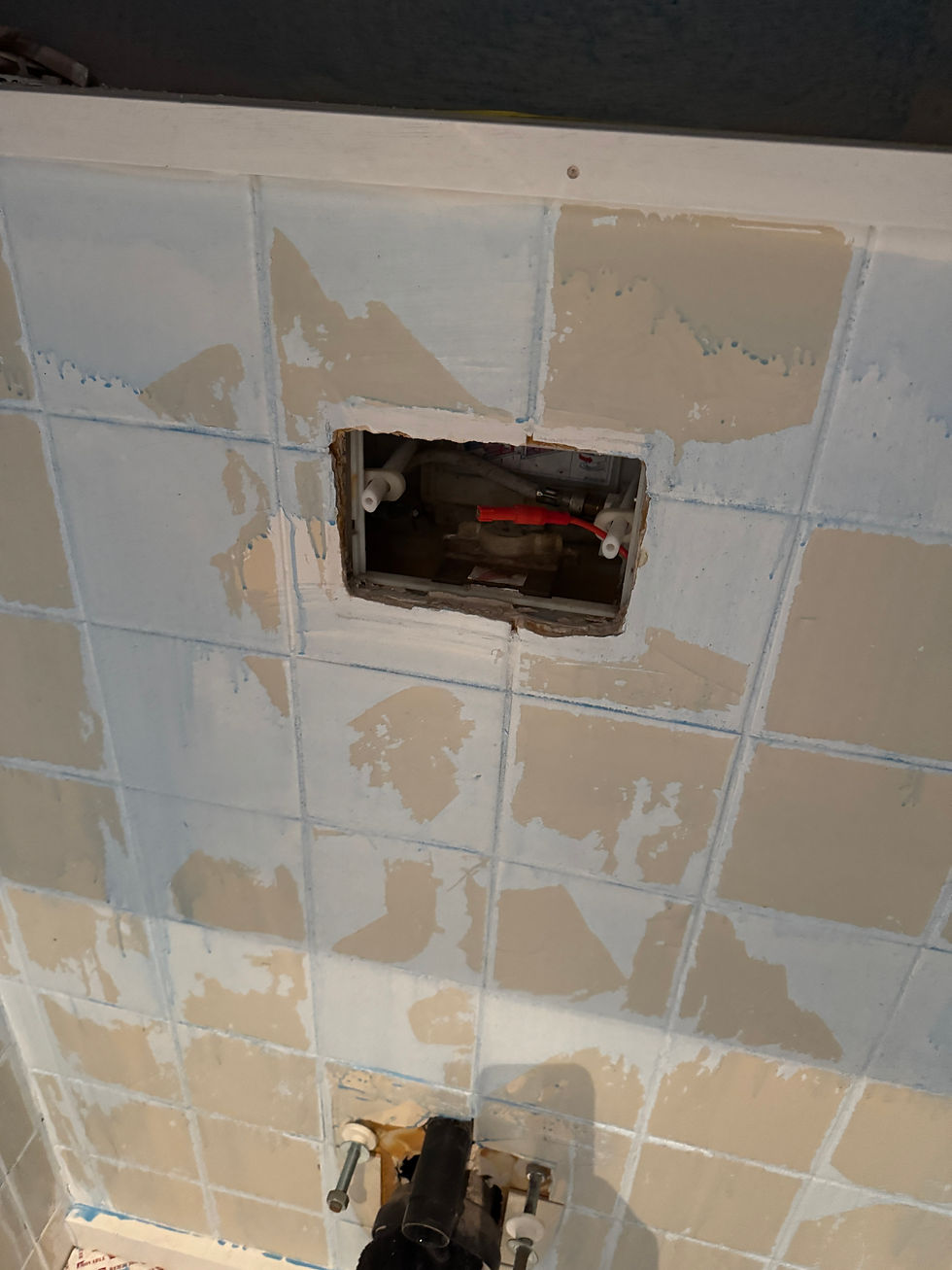
Although I was not the one doing the preparation, I quickly realised how much of the project lives in that invisible stage. Covering old tiles is not a matter of applying something over the top and hoping texture will disguise the past. Every grout line has to be addressed.
The surface needs to be properly stabilised. The plaster base has to be even and sound before any decorative finish goes on.
That preparation alone took a full day before we even reached the application and drying phase. The 'normal' stucco took another full day. And then came the waiting.
Drying Time Does Not Care About Your Schedule
The plaster required ten full days to dry properly before anything else could be applied. Not until it looked dry. Not until it felt dry. Properly dry. Rushing that stage risks compromising the final finish, and there is little point in investing in decorative stucco if you are not prepared to respect what sits beneath it.
After those ten days, there was another day of preparation and applying the base before the final layer of the decorative stucco could be applied. Once on the walls, that finish needed three more days to cure.
At this point, the calendar had moved on far more than I had mentally allowed for. Nothing dramatic was happening. No chaos. No disasters. Just time passing while materials did what materials need to do.

The Trade Jigsaw Nobody Mentions
Then there is availability. The plumber could not come immediately to remove the toilet and vanity, which caused a three-day delay at the beginning. Later, once the walls were finished and fully cured, we waited another week and a half before everything could be reinstalled, because life happens, also for plumbers.
The room sat there looking beautifully calm and almost complete, yet entirely unusable.
And of course, the final finishing around the vanity kit and the junction between floor and wall required yet another tradesperson, who understandably only fits us in when possible. In fact, I begged my plasterer to do it (because it's a dark toilet and only a small vanity, surely no one would notice wonky kit lines).
Each step made sense on its own. Together, they stretched the timeline into something far longer than expected.
Renovation is choreography, and even when you are not holding the tools, you feel every missed cue.

Four Weeks Without Our Toilet
We did still have another toilet in the house, so this was not a full domestic emergency. But it was the one my husband and I use daily, which meant nighttime trips downstairs became routine and mornings required a little more coordination than usual.
There is something humbling about standing in a beautifully finished space that you cannot actually use because one final installation is still pending.

Behind those seamless walls were 3 days of prep, ten days of plaster drying, three days of stucco curing, trade delays at both ends of the project, and a four-week stretch that tested both our optimism and, occasionally, our bladder.


What This Actually Taught Me
The biggest lesson is simple: small does not mean quick.
A surface update still demands preparation, drying time, and careful sequencing. Even when you are not changing layout or replacing flooring, the materials themselves set the pace. And trade availability will always have its own logic.

The finished result now feels calm and effortless, which is exactly the point. But that calm surface was built on patience and a timeline I would absolutely double next time.
Because yes, there is another toilet waiting its turn. This time, I am bracing myself properly.