
Stone Kitchen Countertops Explained: A Practical Guide To Every Common Option

Stone kitchen countertops are often chosen based on how they look in a showroom. Perfect lighting, polished slabs and reassuring sales talk can make almost any surface feel like the right choice. What is far less visible at that point is how a material behaves once the kitchen is actually used.
Heat, spills, cleaning, wear, time and budget all play a role. Some surfaces quietly cope with daily life. Others demand attention, care and compromise. Understanding these differences before choosing matters far more than trend appeal.
This guide explains the most common stone and stone-like countertop materials, how they perform in real kitchens, what they generally cost and how to choose what actually fits your life.
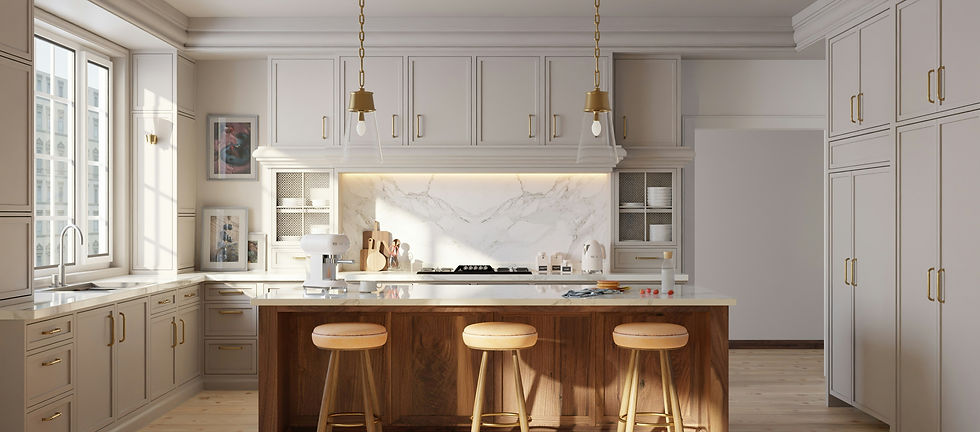
Natural Stone Versus Engineered And Sintered Surfaces
Before looking at individual materials, it helps to understand the main categories.
Natural stone is quarried from the earth. Marble, granite, limestone and soapstone all fall into this group. Each slab is unique, porous to some degree and will change over time.

Engineered and sintered surfaces are manufactured. Their structure is controlled, which makes performance more predictable and maintenance lower. Costs are also more consistent, which matters for many households.
Engineered Stone Countertops Explained
Engineered stone is made by combining natural stone particles with binding agents to create a uniform surface. The most common example used in kitchens is quartz.
The main appeal of engineered stone is predictability. Colour, pattern and behaviour are consistent from slab to slab. It does not require sealing and resists staining well, making it feel reassuringly low effort.
The key limitation is heat. Because engineered stone contains resins, it does not tolerate high temperatures. Hot pans can scorch or permanently damage the surface, which is often underestimated at the selection stage.
Engineered stone suits kitchens where visual consistency, controlled costs and low day-to-day maintenance are priorities, provided heat exposure is managed carefully.

What Sintered Means In Countertop Materials
Sintered surfaces are made by compressing natural minerals under extremely high heat and pressure. This process mirrors what happens to stone in nature, but accelerates it dramatically.
Raw materials such as quartz, feldspar, clay and mineral pigments are fused together without the use of resins. The result is a very dense, stable surface that is non-porous and highly resistant to heat, stains and UV light.
Ceramic and porcelain countertops fall into this category. Because they contain no resins, they do not scorch, discolour or require sealing. This is what gives sintered surfaces their reputation for durability and minimal maintenance.
Granite Countertops
Granite is a hard igneous natural stone formed under extreme heat and pressure.
It is popular for its durability and heat resistance. Hot pans are less of a concern here than with many other surfaces, and scratching is uncommon.
What is often overlooked is maintenance. Granite is porous and needs sealing. Not all granite performs the same. Lighter colours stain more easily than darker ones, and sealing needs to be repeated over time.
Granite suits busy kitchens where heat resistance matters and where some ongoing care is acceptable.

Marble Countertops
Marble is a metamorphic natural stone with a softer structure.
Its appeal lies in its depth, softness and movement. Nothing truly replicates the look of real marble.
Marble etches easily when exposed to acidic ingredients such as lemon, vinegar or wine. Sealing helps reduce staining but does not prevent etching. Over time, the surface develops patina. This is not a defect, but it is visible.
Marble suits those who value character over perfection and are comfortable with a surface that will change.

Quartz Countertops
Quartz is an engineered surface made from crushed quartz bound with resin.
It offers consistent colour and pattern, does not require sealing and is easy to clean. This controlled look is a major reason for its popularity.
Quartz is not heat-resistant. Hot pans can scorch or permanently mark the surface. Once damaged, repairs are difficult or impossible.
Quartz suits kitchens where visual consistency and low daily maintenance are priorities, as long as heat exposure is carefully managed.

Ceramic And Porcelain Countertops
Ceramic is a sintered surface fired at extremely high temperatures. It is dense, stable and non-porous.
It is highly resistant to heat, stains and scratches. It does not absorb liquids, does not discolour and does not require sealing.
This is why I chose ceramic myself. It requires no maintenance beyond normal cleaning. No sealing schedules. No special products. No concern about spills or hot pans. It stays exactly as it is meant to, which is what I want from a kitchen surface.
Ceramic suits people who cook regularly and want durability without management or ongoing care.

Limestone Countertops
Limestone is a soft natural stone with subtle movement and a matte appearance.
It is highly porous and marks easily. Sealing is essential and care is ongoing. Limestone is chosen primarily for atmosphere rather than performance.
It suits low-intensity kitchens and those who fully accept visible wear as part of the material.

Soapstone Countertops
Soapstone is a dense natural stone with a smooth feel and darker colouring.
It darkens over time and is often oiled to maintain a consistent appearance. Scratches can occur, but they are usually repairable.
Soapstone suits those who enjoy a lived-in look and are comfortable with regular surface care.

Countertop Finishes: Polished, Honed And Leathered
The finish of a stone surface affects both appearance and how wear shows over time.
Polished finishes are glossy and reflective. They enhance colour and pattern but make scratches, fingerprints and etching more noticeable.

Honed finishes are matte and visually softer. They disguise etching better, though staining can be more visible on porous stones.
Leathered finishes have a subtle texture. They hide fingerprints and minor wear well, although deeper textures can be slightly harder to clean.
The finish choice does not change how a stone behaves, but it does influence how imperfections are perceived.

Kitchen Countertop Costs for Each Type of Stone
Cost is often the deciding factor, and it deserves honest consideration.
Granite generally sits in the mid-range, though prices vary widely depending on origin, thickness and rarity. Darker and more common granites are usually more affordable.
Marble tends to sit at the higher end of the scale, especially for recognised varieties. Long-term maintenance and the likelihood of visible wear should be considered part of the overall cost.
Quartz usually falls into the mid to upper range. While it avoids sealing costs, heat damage is not repairable and replacement can be expensive.
Ceramic and porcelain typically sit in the mid to upper range, depending on brand and thickness. Installation costs can be higher due to the precision required, but long-term maintenance costs are minimal.
Limestone and soapstone vary significantly. Initial costs can be lower, but ongoing care and visible wear influence long-term value.
Looking beyond the initial quote and considering lifespan, maintenance and repair potential gives a far more realistic picture of value.

How To Choose The Right Countertop Material
The most important factor is lifestyle, closely followed by budget.
How often you cook?
How much care you are willing to give a surface?
Whether visible wear will bother you over time?
What you are comfortable spending now and in the long term?
There is no universally better material. The best choice is the one that fits both how you live and what you can realistically afford.
Final Thoughts
Stone countertops are not neutral. They respond to how you live, how you cook, how much attention you want to give them and what you are willing or able to spend.
A higher price does not automatically mean a better fit. Some of the most expensive surfaces demand the most care, while others quietly perform for years without intervention.
Understanding performance, cost and long-term behaviour allows you to choose a surface that supports daily life rather than stretching it.


