
How to Use Color Theory and Other Design Principles When Designing Outdoor Spaces

Understanding how colors work together can transform your outdoor spaces from ordinary to extraordinary. Color theory provides a framework for combining hues that complement your home's architecture and reflect your personal style.
The right colors do more than look good. When applied thoughtfully to elements like garage doors, landscaping and outdoor living areas, these can boost your property's curb appeal and market value.

The Psychology Behind Your Color Choices
Color psychology explores how different hues evoke specific emotions. Blue can convey calmness and trustworthiness, yellow can create a welcoming atmosphere and black can project sophistication. These associations can influence how potential buyers and guests perceive your home before they even step inside.
Color theory is the scientific principle that explains how colors work together. Hue, value, temperature and saturation change the visual relationships between colors. Pure red can become baby pink or deep cranberry, depending on how you change these elements. When you select colors strategically, you create harmonious spaces.
Rather than settling on one color permanently, you can refresh a space using hues with seasonal associations. Lush berry tones are reminiscent of summer, while light pearly tones emulate winter's crisp elegance. Create outdoor spaces that feel appropriate for your climate and personal preferences.

How to Build a Cohesive Color Palette
Creating a color palette may seem daunting, but understanding a few simple concepts makes the process manageable. Here are the main basics to help you.
1. Use a Color Wheel to Understand the Color Schemes
The color wheel was derived from Isaac Newton's experiments with prisms and sunlight. This tool demonstrates how the presence of certain hues affects your perception of others when presented together.
Neighboring colors, like blue and green, are harmonious and evoke similar emotions. These combinations create a calm, unified look.
Meanwhile, colors on the opposite side of the color wheel create high contrast and build a punchy, distinctive look. Think purple and yellow or red and green. These bold pairings make a statement and help your home stand out in the neighborhood.

2. Understand the Primary, Secondary and Tertiary Colors
Red, yellow and blue are the primary colors that form the foundation for most other colors. When mixed, you create secondary colors like orange, green and purple.
Mixing primary colors and secondary colors builds tertiary colors like red-orange and blue-green. Having a variety with different tones and shades will help you find interesting combinations that go beyond the basics. This knowledge will give you the confidence to experiment with unexpected pairings that feel intentional.

3. Utilize the 60-30-10 Framework When Selecting Shades
The 60-30-10 rule is a simple framework for applying a color palette to a user interface. It also applies to your home's exterior. It recommends 60% of the space use the dominant color. For variety, 30% gets a different hue. The rest is for the accents.
For instance, you could paint the walls your dominant color, choose furniture in the secondary hue and decorate with pillows, lamps and similar accessories in the accent color. This principle translates beautifully to outdoor spaces. Your home's siding might be the dominant 60%, your porch floor and trim the 30% and your front door and planters the 10%.

Applying Color Principles to Your Home's Exterior
Once you have the basics of color theory and psychology down, apply them to your home's exterior to maximize impact. Here are some suggestions.
Choosing a Garage Door for Maximum Curb Appeal
A garage door can complement architectural styles while helping your property stand out in the neighborhood. Plus, the right choice can get some significant ROI. According to Southeastern Garage Doors, a garage door makes up a large portion of your home’s exterior, making it one of the most important visible elements.
When asked what the best garage door styles for increasing home value are, Southeastern Garage Doors highlighted how impactful modern styles are due to their minimalist and contemporary look. It also points out that custom garage doors can significantly impact ROI.
"Based on industry data, custom doors boost resale value by 4% to 7% compared to standard doors’ 2% to 4% increase, delivering superior returns when it’s time to sell your home," it states.
Custom options let you choose your own colors, stains and finishes to ensure a harmonious match with your home's exterior palette. Whether you prefer a bold contrast or subtle coordination, the right garage door color can elevate your entire facade.

Boosting Your Front Yard's Curb Appeal
Color in landscaping and hardscaping complements your home's main palette. Flowers, shrubs, mulch and walkways offer tremendous room for creativity and personal expression.
Techo-Bloc suggests the industry is shifting toward colors that enhance natural beauty in landscape design, such as cream-colored stones and silver granite borders. “These hues are not just about following trends; they are about creating outdoor spaces that resonate with personal style and the surrounding environment,” It shares.
Consider how your plantings change throughout the seasons. Select perennials and annuals in colors that work with your hardscaping year-round, or embrace seasonal variety by rotating plantings that complement different aspects of your home's palette.

Styling Your Patio Space
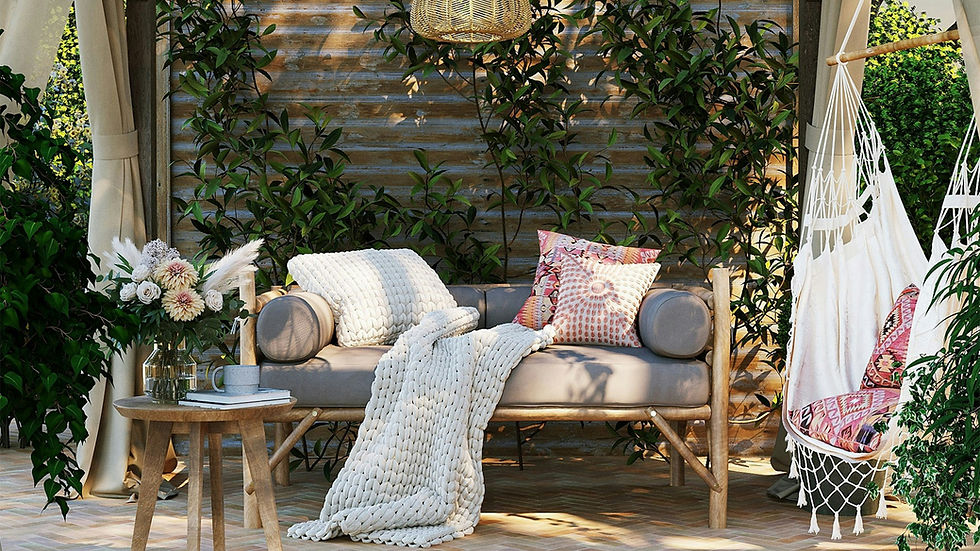
Your patio should feel like a cohesive outdoor room with a unified color palette. Some homeowners extend their home's interior color palette to patio furniture, umbrellas and decor, maintaining continuity between indoor and outdoor living spaces.
Polywood also suggests using your existing architecture as a reference when giving your patio a makeover. “Consider your home’s style, exterior paint colors and patio composition to narrow your choices,” it recommends. “Look for shades that accentuate these elements, like creamy off-white to complement your house’s charcoal siding, or sage to contrast with a red brick patio.”
Don't forget about functional elements like outdoor rugs, throw pillows and table settings. These accessories provide opportunities to introduce accent colors that tie your entire outdoor room together.
Designing Your Yard Oasis
Your yard is a prime place to enjoy the outdoors throughout the day. You can use color to define different zones, like a dining area, a play area and a garden in the front or back yard.
Yardzen notes that the main approaches to designing your yard’s landscaping are a cross between modern and traditional, and formal and informal. “Most people prefer styles that fall somewhere in the middle,” it explains. “They could want a modern look with a few traditional accents, or formal planting with a few moments of naturalness.”
Your color choices can reinforce these style preferences. Formal gardens might feature symmetrical plantings within a limited color palette, while informal spaces embrace a wider range of hues for a cottage-garden feel.

Elevate Your Home's Value with Smart Design Choices
Applying color theory principles across your exterior creates major curb appeal. Whether you're choosing the best garage door styles to increase home value or sprucing up the yard for outdoor living, start seeing your home's exterior as a blank canvas and let your chosen hues shine through every design decision.


