
Interior Design Choices I'll Never Understand

I spend a lot of time looking at houses. Between being an interior design tutor, writing for Whispering Bold and constantly working on our own homes, it's fair to say design occupies a large part of my day. Whether I'm walking through neighbourhoods, scrolling online, watching renovation programmes on television or planning the next project in one of our own houses, I keep noticing the same features appearing again and again.
Some of them make perfect sense and you can immediately see why they've become popular. Others leave me staring at the screen, or standing outside someone's house, wondering if I'm missing something.

This isn't about personal taste. If you love bold colours, maximalism, minimalism or anything in between, fill your home with whatever makes you smile. The homes I enjoy most are the ones that reflect the people living in them.
What I'm talking about are design decisions that seem to have become almost automatic. They're added because we've seen them in enough magazines, display homes and renovation programmes that they start to feel like they belong, even when they don't really add anything. Every time I come across one, I find myself asking the same question. What problem is this actually solving?
Fake dormers
A well-designed dormer can completely transform an attic. It brings in daylight, creates standing room and often turns an awkward loft into a space that people genuinely want to use. It's one of those architectural changes that improves both the inside and the outside of a home.
Which is exactly why decorative dormers confuse me so much. If you're already changing the roofline and investing in construction, why not take that little extra step and gain something useful in return? Natural light changes how a room feels throughout the day. Extra head height changes how comfortably you can use the space. A fake dormer gives you the appearance of those benefits without delivering any of them. It always feels like such a missed opportunity.
Decorative shutters that never close
I have nothing against shutters. Quite the opposite. Functional shutters are beautiful, practical and incredibly useful in the right climate. They provide shade, improve privacy and help protect a home from the weather. They were designed to do a job.

Then there are the decorative shutters fixed permanently beside a window that couldn't actually cover the glass if they tried. Once you notice them, you start seeing them everywhere. They're often too narrow, mounted too far away from the window and attached so they can never move.
I understand that they're meant to add character, but I always wonder why we imitate a practical feature instead of simply choosing another decorative detail that doesn't pretend to be something it's not.
Cooktops in kitchen islands
I've already written an entire blog on this subject, so I'll try to keep this one brief.
The cooktop in the island has almost become the default in modern kitchens. It looks sleek in display homes, but I'm never convinced it's the most practical choice. You're giving up one of the largest uninterrupted work surfaces in the kitchen, introducing splatter into what could otherwise be a social gathering spot and often making extraction more complicated as well.

Every time I see it, I wonder whether it was chosen because it genuinely suited the layout or because it's simply what people expect a modern kitchen to have.
Two bathroom sinks in a bathroom that barely fits them
I completely understand why double vanities became popular. On paper they sound wonderfully practical. Two people can brush their teeth at the same time, everyone has their own space and mornings become that little bit easier.
The funny thing is, my husband and I often do brush our teeth together, yet somehow we still end up using the same sink to rinse. One basin becomes the official rinsing sink while the other sits there looking slightly left out.
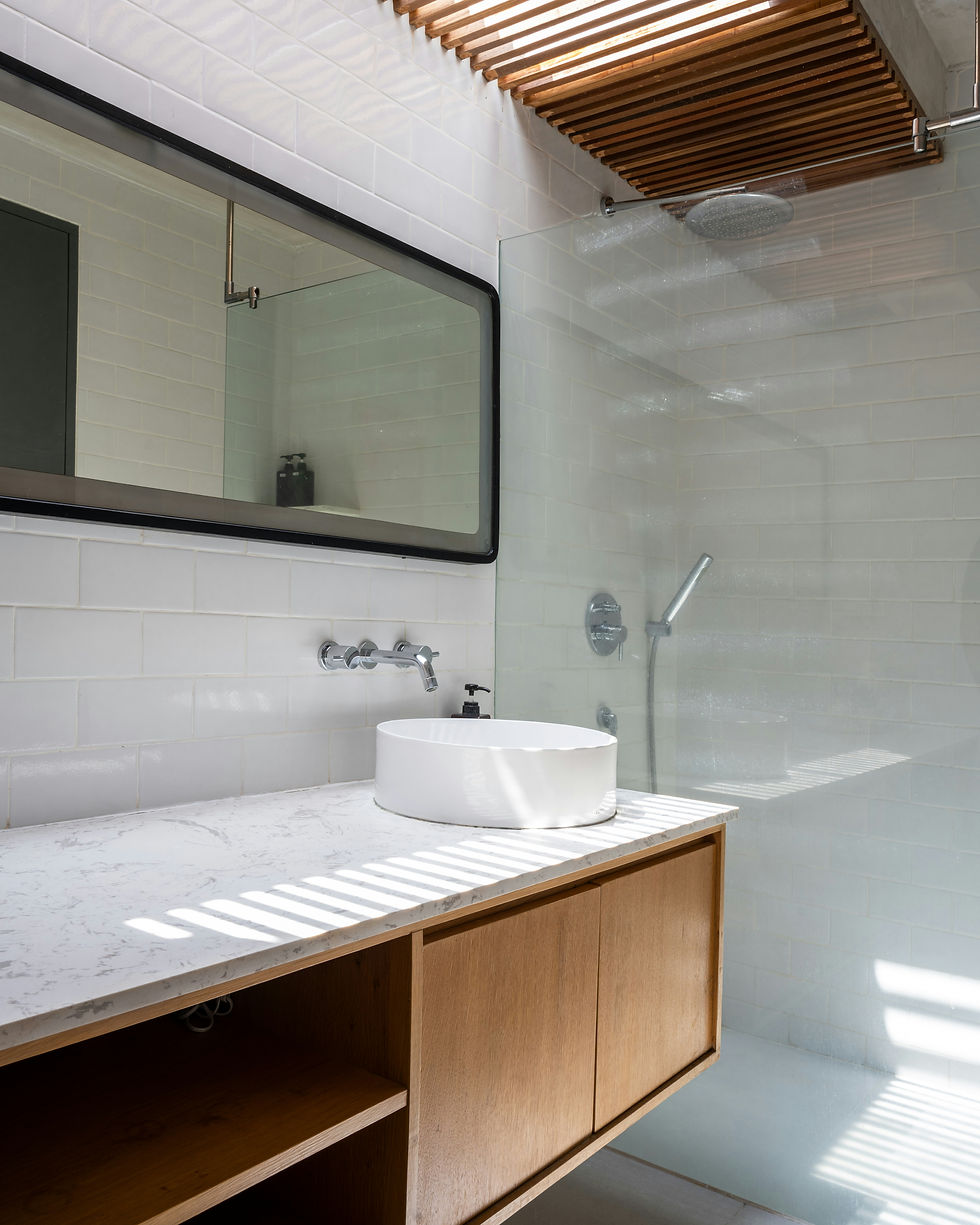
Meanwhile, we've sacrificed valuable countertop space and usually a decent amount of storage underneath. In a large bathroom, I think double sinks can look fantastic. In a compact one, I'd almost always choose another drawer over another basin.
Open shelving beside the cooktop
Beautiful styling photographs have done wonders for open shelving. Perfect stacks of bowls, beautiful cookbooks and carefully placed olive oil bottles make it look effortlessly lived in.

Real kitchens are a little less forgiving. Steam, grease and cooking splatter don't care how beautifully you've styled those shelves. Before long, everything sitting there needs regular cleaning simply because of where it lives. There are plenty of places where open shelving works brilliantly. Right beside the cooktop just isn't one of them.
Freestanding baths squeezed into tiny bathrooms
I genuinely love freestanding baths. In a spacious bathroom, they feel sculptural and luxurious, becoming a feature in their own right.
The problem starts when we try to force one into a room that simply isn't large enough. Suddenly, there's barely enough room to clean around it, the plumbing becomes awkward and moving through the space feels more cramped than it did before.

That's why I'm such a fan of half-freestanding baths. You still get that beautiful look from the front, but without sacrificing practicality every single time you need to clean the bathroom.

Barn doors everywhere
There was a period when every renovation programme seemed determined to install a sliding barn door somewhere. Bedrooms, bathrooms, laundries... apparently no room was complete without one.
I've never quite understood the obsession. They don't block sound particularly well, they don't keep smells contained, they offer less privacy than a conventional door and they need an entire clear wall to slide across. Unless they're solving a genuine layout problem, they often feel like a compromise disguised as a design feature. Personally, I think they've had their moment.

Fake fireplaces and decorative chimneys
I absolutely love a real fireplace. Whether it's wood burning or gas, it creates warmth, atmosphere, and naturally becomes the heart of a room.
What I struggle to understand is building an entire chimney breast simply to install an electric fireplace with digital flames, particularly in places where you hardly need heating in the first place. If you live in a warm climate, why dedicate an entire wall to pretending you have a fire?

Without the heat, it starts feeling more like a large television showing a looping fireplace video. I'd rather use that wall for beautiful joinery, artwork or storage than imitate something the house doesn't actually need.
Does every fireplace really need a mantel?
While we're talking about fireplaces, can we also talk about mantels?
Some fireplaces absolutely need one. They suit the architecture, balance the proportions and finish the room beautifully. Others seem to receive a mantel simply because we've collectively decided fireplaces are supposed to have them. I sometimes wonder whether we'd choose one if we'd never seen another fireplace before.

Unless you're hanging Christmas stockings every December, it's worth asking whether your fireplace actually needs that extra shelf. Sometimes the cleaner, simpler version underneath is stronger precisely because nothing has been added to it.
Maybe I'm missing something...
Perhaps every one of these choices has a perfectly sensible explanation, and if you've made one of them work brilliantly in your own home, I'd genuinely love to hear about it. Good design has never been about following someone else's rules, including mine.
For me, though, the best design decisions always have intention behind them. They solve a problem, improve the way a home functions or make everyday life a little easier. Somewhere along the way, I think we've started copying details rather than questioning them. We see them often enough that they begin to feel like things every home should have.
Whenever I'm choosing between two options, I come back to the same question. If nobody else was doing this, would I still choose it? If the answer is yes, it's probably a feature worth keeping. If the answer is no, perhaps it was never needed in the first place.


