
How To Make A New Build Feel Less Like A New Build

One thing I always notice in a brand new home is how untouched everything feels. Not in a bad way, just in a way that says nobody has really put their own stamp on it yet. It still looks like the last page of the developer's brochure.

It’s not that new builds are inherently bad. Some of them are actually very practical to live in. Better insulation, sensible layouts, decent natural light. The problem is that many of them arrive looking a bit emotionally unavailable.
People often assume what’s missing is “character”, but then immediately panic-buy twenty-seven beige accessories and a giant clock with Roman numerals. That rarely helps. The issue is usually depth.

Older homes naturally build up layers over time. Materials age, paint fades, and floorboards wear where people actually walk. Things get replaced over the years by different owners, each leaving behind a little bit of themselves.
A brand new house hasn't had the chance to do any of that yet, so everything is the same age, the same finish and, sometimes, just a little too uniform.

Stop Leaving Everything Builder-Standard
One of the biggest mistakes people make is treating the entire house like it has to remain exactly as it was handed over. There’s this strange fear around changing anything because it feels wasteful or “too soon”. Meanwhile, the standard finishes developers choose are usually designed to appeal to as many people as possible while exciting absolutely nobody.
Paint alone changes more than people expect. Not just colour, but texture and finish. Flat matt walls tend to soften a room immediately compared to overly reflective paint bouncing light everywhere.
The standard finishes developers choose are usually designed to appeal to as many people as possible while exciting absolutely nobody.

Limewash, decorative plaster, panelling or wallpaper can also help break up that endless smoothness many new builds have. Even changing skirting boards, hardware or internal doors can shift the atmosphere surprisingly quickly. The goal is not to fake age. It’s simply to remove some of that untouched catalogue energy.

Lighting Is Often The Real Culprit
A lot of new builds feel colder at night than they do during the day, even when the furniture is perfectly nice. Usually, it’s the lighting. Rows of cool-toned spotlights blasting down from the ceiling do very little for atmosphere unless your dream aesthetic is “high-end dental clinic”.
Most homes need far more layered lighting than people realise. Table lamps, wall lights, floor lamps, dimmers, softer bulbs. Light at eye-level instantly changes how a room feels because it creates pockets of warmth instead of flattening the entire space evenly. It also changes how paint colours look.
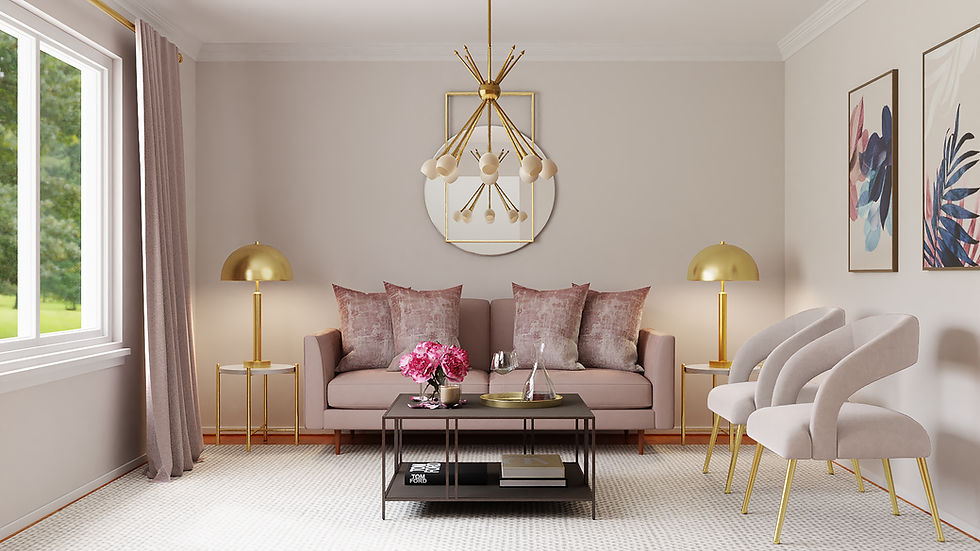
That soft creamy white people chose in the showroom often turns slightly yellow or grey by evening depending on the orientation of the room and the bulb temperature. This is why lighting decisions and paint decisions should never really be separated from each other.
Matching Furniture Makes Everything Feel More Staged
There’s something about buying an entire furniture set from one shop that immediately pushes a home into “display suite” territory. Matching wood tones, matching legs, matching finishes, matching everything. It looks organised for about twelve minutes before starting to feel impersonal.

The homes that feel interesting usually have some contrast built into them. A vintage cabinet beside a contemporary sofa. Different wood tones working together instead of repeating identically. Slight variation in finishes and shapes. Even one older piece can interrupt that overly polished feeling. It creates tension in a good way.

New builds especially benefit from this because the architecture itself is often already very clean and uniform. If every object inside the house follows the exact same logic, the whole thing can start feeling a bit one-note.
Texture Does A Lot Of Heavy Lifting
Modern homes tend to contain a lot of hard surfaces without people fully noticing it at first. Smooth plaster walls, large windows, sleek kitchens, tiled bathrooms, engineered flooring. Once you strip back all the styling, many new builds are actually fairly echoey spaces.
This is where texture becomes incredibly important. Linen curtains, woven rugs, timber, ceramics, boucle, aged metals, and softer upholstery fabrics. Not because every room suddenly needs to become “cosy” in an aggressively decorative way, but because texture catches light differently throughout the day. It gives rooms variation without relying on clutter.
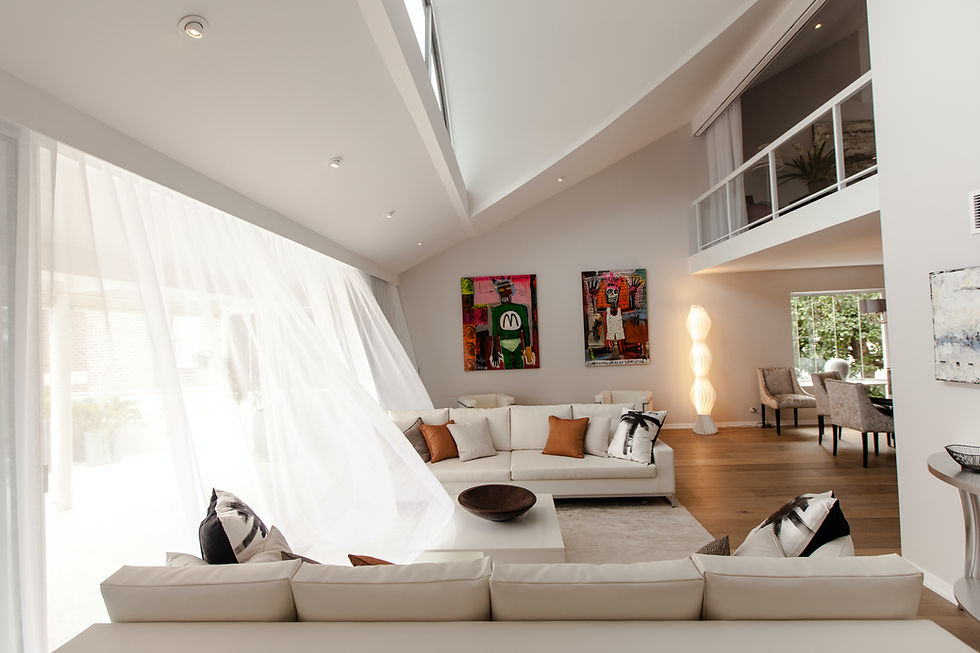
Curtains alone can completely change the atmosphere in a new build. Suddenly, the acoustics soften, the light diffuses differently, and the room stops feeling slightly like an empty Airbnb waiting for check-in instructions.
Vintage Pieces Calm Things Down Surprisingly Fast
This is probably why vintage works so well in newer homes. Older pieces already carry variation naturally. The timber is rarely perfectly uniform. Brass has patina. Paint finishes have depth. Even old artwork tends to bring a softness that brand-new mass-produced décor often lacks.

That doesn’t mean the house needs to become a full antique shop. One or two vintage pieces are often enough. An old side table, a worn rug, vintage dining chairs, antique mirrors, and second-hand lighting. They interrupt the visual perfection just enough to make everything else feel more believable. Ironically, rooms usually start feeling more expensive once they stop looking entirely new.
Kitchens And Bathrooms Usually Need Softening The Most
These rooms are often the biggest giveaway in a new build because they tend to lean heavily into uniform finishes. Handle-less cabinetry, identical surfaces, oversized mirrors, and very sharp lighting. Functional, yes. Warm, not always.

You don’t necessarily need a full renovation to shift the atmosphere. Swapping bar stools, adding softer wall lighting, changing cabinet handles, introducing timber elements or styling open shelving more naturally can already make a difference.

Bathrooms benefit enormously from layered lighting as well. A single overhead LED light is rarely doing anyone any favours at 9pm when you’re trying to resemble a functioning adult after a long day.
Character Usually Comes From Restraint
The interesting thing about homes with personality is that they rarely look like somebody tried to inject personality into every single corner. There’s usually a bit of breathing space. Some contrast. A few things that feel slightly imperfect or unexpected.

People often assume character comes from adding more, when it's usually the opposite. It comes from being more selective, choosing pieces that have a bit of presence, letting materials age naturally and accepting that a home doesn't have to be finished the moment you move in. The best interiors tend to grow over time, not appear after three frantic weekends and a string of late-night orders from three different homeware websites.
A new build doesn't need to masquerade as a centuries-old farmhouse to feel welcoming. It just needs a bit of warmth, some contrast and enough personality to stop looking like the display home down the road still has its furniture in it.


