
The Kitchen Cabinet Terms Everyone Uses Like You Should Just Know Them

Kitchen companies really do love assuming everybody arrived fully trained in cabinet terminology. You walk into a showroom wanting cupboards that look nice, and suddenly somebody is asking whether you prefer skinny shaker, slab front, veneered oak, in-frame or lacquered matte lacquer with integrated rails. Meanwhile, you are still mentally recovering from the fact that one drawer somehow costs the same as a small holiday.
Kitchens have developed their own language entirely, and half the confusion comes from the fact that some terms describe style, some describe construction, some describe finish, and others are basically marketing with very good lighting.

This is also by no means an exhaustive kitchen dictionary because kitchen terminology spirals quickly once you get into materials, finishes, construction methods and hardware systems.
Some names describe the shape of the cabinet door, others the way the kitchen is built, and others are just trend terms that suddenly appear everywhere for five years straight. This is simply a breakdown of the terms that seem to come up most often once you start looking at kitchens online and realise everybody is casually discussing cabinetry like they apprenticed in a workshop in northern Italy.

Shaker Kitchens
Shaker kitchens have somehow become the default answer to almost every renovation now. Safe but not boring. Traditional but still workable in newer homes. The confusing part is that “shaker” no longer means one very specific thing because there are now about seventeen versions of it floating around online.
Traditional shaker has a wider-framed border around the cabinet door, while newer versions have become slimmer and more minimal. Some still feel classic, while others are edging dangerously close to looking like outlined rectangles for the sake of it.

The reason shaker works so well is because it has enough detail to stop a kitchen from feeling flat without becoming overly decorative. It bridges traditional and contemporary interiors quite nicely, which is why so many people land there eventually, even after initially insisting they wanted something ultra-modern.
Colour changes the whole feel too. A dark shaker kitchen with stone worktops can feel tailored and dramatic, while the exact same cabinetry in pale beige or muted blue suddenly feels soft and country-adjacent. The style itself is not really the issue. It is usually the execution around it that changes everything.

Skinny Shaker Kitchens
Skinny shaker arrived when regular shaker apparently decided it needed a cooler younger sibling. The border around the cabinet door becomes much thinner, which gives the kitchen a cleaner and more contemporary look overall. They photograph beautifully because they still have texture and shadow lines but without the chunkier feel of more traditional shaker kitchens. Every second showroom currently seems to contain one in warm oak, mushroom or olive green.
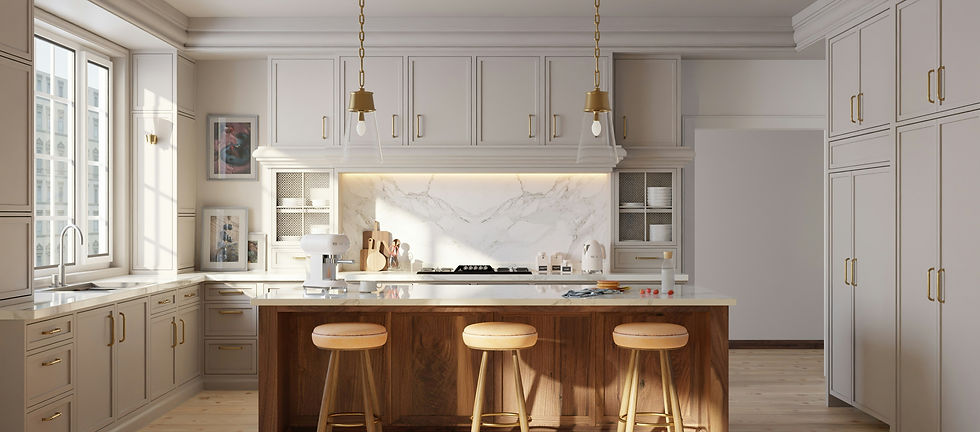
They do work well in more modern homes because they soften contemporary kitchens slightly without tipping fully into classic territory. The only thing that remains to be seen is how timeless they actually are long-term, because trends have a habit of disguising themselves as “modern classics” while everybody collectively loses perspective for a few years.
That said, a well-balanced skinny-shaker kitchen still feels considerably warmer than a lot of ultra-flat minimalist kitchens that can end up looking slightly like stylish office storage.
Slab Front Kitchens
Slab-front kitchens are the flat-front kitchens with no framing or detailing on the cabinet doors. Just clean uninterrupted surfaces. They tend to feel more modern immediately and work especially well in smaller spaces because visually there is less going on. Everything feels calmer and more streamlined, particularly when combined with integrated appliances and minimal handles.

The thing with slab kitchens is that the finish suddenly matters a lot more because there is nowhere to hide. Texture, colour and material become the focus instead of detailing. Matte black slab fronts can look incredible until somebody with moisturiser on their hands touches them once and suddenly the entire kitchen becomes a fingerprint crime scene.
Wood veneer slab kitchens tend to age better visually because the grain adds some softness and movement. Otherwise, ultra-flat kitchens can occasionally veer slightly into luxury hotel kitchenette territory if every surface is too sleek at once.

Inframe Kitchens
In-frame kitchens are usually introduced in showrooms with a slightly reverent tone because they are considered more premium.
Structurally, the cabinet doors sit within a visible frame rather than attaching over the cabinet carcass itself. It is a more traditional construction method and generally involves more craftsmanship and detail, which is part of why the price climbs so enthusiastically.

They do have a beautiful tailored look when done properly. Everything feels weightier and more furniture-like rather than purely functional. In older homes especially, in-frame kitchens often sit more naturally within the architecture because they feel connected to traditional joinery.

The downside is that this is usually the stage of kitchen shopping where people start blinking rapidly at quotes while pretending not to calculate how many more years they may need to keep their current car.
Handleless Kitchens
Handleless kitchens always sound incredibly sleek in theory. Clean lines. Seamless surfaces. Nothing interrupting the cabinetry. And visually, they absolutely can look stunning, especially in contemporary spaces where simplicity is doing a lot of the heavy lifting. They also make smaller kitchens feel less visually cluttered because there are fewer elements breaking up the cabinetry.

Living with them is where opinions become stronger. Push-to-open systems sound clever until somebody repeatedly presses the wrong cupboard while trying to unload groceries one-handed. Rail systems are generally easier, but even then some people quickly realise they actually enjoy the practicality and visual rhythm that handles bring to a kitchen.
There is also something slightly ironic about spending a fortune creating a seamless minimalist kitchen only to end up with visible fingerprints everywhere because nobody can open anything without touching the doors constantly.

Wood Veneer Kitchens
Wood veneer gets misunderstood constantly because people hear “veneer” and assume fake wood immediately. Proper wood veneer is actually a thin layer of real wood applied over a stable core material, which allows kitchens to have the warmth and texture of timber without some of the movement and instability that fully solid wood can bring. Good veneer kitchens can look incredibly beautiful and often feel much richer than heavily processed faux wood finishes.

The quality variation is massive though. Some veneers have gorgeous grain patterns and depth while others look oddly repetitive and flat.
Warm wood kitchens are very much back again now, although thankfully in a softer way than the aggressively orange oak kitchens many people are still emotionally recovering from. Walnut, smoked oak and lighter textured woods feel much more relaxed and architectural now. The heavy glossy cherry timber era can stay firmly where it belongs.

Laminate Kitchens
Laminate kitchens have had a slightly unfair reputation problem for years because people still associate them with cheap, shiny finishes from decades ago. Newer laminates are far better than many people realise. Some mimic wood, stone and textured finishes surprisingly convincingly, and they are often far more forgiving in busy family kitchens than delicate painted cabinetry.

They are practical, durable and generally less stressful to live with. Which honestly matters. Not everybody wants to panic every time somebody leans a bicycle helmet against a cabinet door.
High-end kitchens often dominate social media, but there is something refreshing about materials that simply survive normal life well. The gap between “luxury look” and “practical reality” can become surprisingly wide in kitchens very quickly.
Painted Kitchens
Painted kitchens sound straightforward until you realise different companies mean completely different things by it. Some are genuinely spray-painted timber doors while others are vinyl-wrapped or foil-coated finishes designed to imitate painted cabinetry. Visually, they can look similar initially, but durability and repairability can differ quite dramatically over time.

Painted timber kitchens do usually have a depth and softness to the colour that feels more natural, especially in daylight. They also tend to age more gracefully because minor wear can add character rather than immediately looking damaged.
On the other hand, they generally require a bit more care and inevitably cost more. Kitchen finishes are very much one of those situations where budget, practicality and aesthetics start wrestling each other behind the scenes.
Fluted And Ribbed Cabinetry
Fluted and ribbed cabinetry is everywhere at the moment. Islands wrapped in vertical slats. Ribbed oak panels. Reeding details on everything that remains still long enough. Used carefully, it adds texture and warmth beautifully because kitchens can otherwise become very flat visually with all the hard surfaces going on.

The risk is usually overcommitting. A small amount of ribbed detailing can elevate a kitchen nicely, while an entire room covered in vertical slats starts feeling slightly like a very expensive sauna reception area.

Texture works best when there is balance around it. Otherwise, trends can age remarkably fast once every showroom, café and boutique hotel starts repeating the exact same detailing simultaneously.

Matte, Satin And Gloss Finishes
Kitchen finishes change the entire personality of cabinetry more than people expect. Matte kitchens tend to feel softer and more contemporary while gloss reflects more light and creates a sharper, cleaner look overall. Satin usually lands somewhere comfortably in the middle and is often easier to live with day-to-day because it hides fingerprints and marks slightly better.
Gloss kitchens had such a strong era for a while that people now sometimes dismiss them entirely, but they still make sense in certain spaces, especially smaller, darker kitchens that benefit from extra reflection.

Matte finishes may be more current, but some are surprisingly high-maintenance despite looking beautifully understated in photos.

Kitchens have a habit of becoming much less glamorous once cooking, children, coffee splashes and general life begin happening inside them daily.

Why Kitchen Showrooms Suddenly Start Making More Sense
At some point during a renovation, kitchens stop being “white or wood?” and suddenly become conversations about rail systems, framed cabinetry, sprayed finishes and whether something is technically veneer or laminate.
The terminology starts sounding far more complicated than it needs to be, especially because different kitchen companies often use different names for versions of essentially the same thing. Add showroom lighting and a marble island the size of a small apartment into the mix and it becomes very easy to lose perspective entirely.

Understanding the language behind kitchens does help though, mainly because you start noticing the difference between style, construction and finish instead of lumping everything together as just “nice kitchens.”
It also becomes easier to spot which details genuinely matter to you and which ones are mostly there to sound impressive during sales conversations.
Some people genuinely want handcrafted in-frame cabinetry that will outlive them all. Others simply want cupboard doors that survive daily life without inducing stress every time somebody touches them with tomato sauce on their hands. Both are fair goals, honestly.


