
What Does 'Intentional' Mean in Interior Design?

Intentional. It's one of those words that seems to have found its way into just about every interior design description lately. Intentional styling, intentional colour choices, intentionally curated spaces. You could be forgiven for thinking it refers to some complicated design philosophy, when in fact the meaning is fairly straightforward.
It simply means making design decisions deliberately, with a reason behind them, rather than choosing things at random or following a trend without considering whether it works for you.

That sounds rather obvious, doesn't it? After all, surely we all put some thought into what we bring into our homes. But there's a difference between choosing something because you like the look of it and considering how it fits into the bigger picture.
Neither approach is necessarily wrong, but understanding that distinction helps explain why interior designers use the word so frequently.
It simply means making design decisions deliberately, with a reason behind them, rather than choosing things at random or following a trend without considering whether it works for you.
Intentional Doesn't Mean Everything Has to Match
An intentional interior isn't necessarily one where every colour has been carefully coordinated or every piece of furniture belongs to the same design style. In fact, some of the most interesting interiors combine things that, on paper, shouldn't particularly work together.
A contemporary sofa alongside an antique cabinet, a bold abstract painting above a traditional fireplace or a collection of mismatched dining chairs can all be deliberate design choices.

The intention might be to create contrast, introduce a little humour or avoid a room looking too predictable. What matters is that the combination has been considered, rather than simply assembled without much thought.
You can mix styles, periods, colours and materials quite freely while still having a clear idea of the look you're trying to achieve. Intentional doesn't mean coordinated to within an inch of its life.
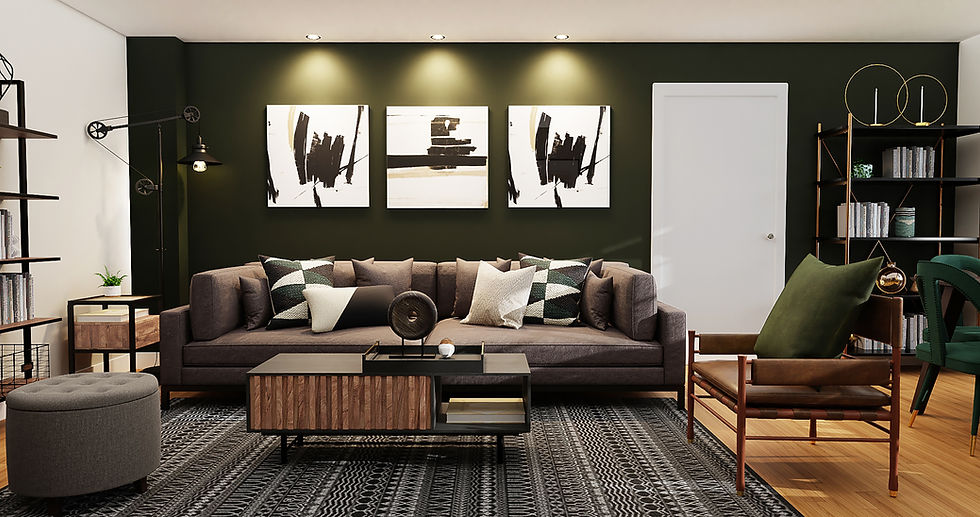
It's About How You Use a Room, Too
We tend to associate intentional design with appearance, but functionality is just as important. A beautifully styled living room might look wonderful in photographs, but if the seating arrangement makes conversation awkward or nobody can comfortably reach the coffee table, some fairly basic considerations have been overlooked.
Good design involves thinking about how people actually use their homes, not just how the finished result will look.

Consider a dining room, for example. Choosing a round table might be intentional because it makes conversation easier and allows people to move around it comfortably. Choosing an extendable table could make more sense if you regularly entertain but don't want a large table occupying the room every day.
Even something as ordinary as positioning a lamp beside your favourite reading chair is an intentional decision. You're choosing something to serve a particular purpose, and that purpose influences the design.

Intentional Doesn't Have to Mean Minimalist
There's a tendency to associate intentional interiors with minimalism, as though making thoughtful choices automatically means owning fewer things. You often see descriptions of carefully selected furniture, restrained colour palettes and beautifully edited collections of objects. There's nothing wrong with that approach, but it's only one interpretation.
A home filled with artwork, books, vintage furniture and collected treasures can be every bit as intentional as a minimalist interior. Perhaps you enjoy surrounding yourself with things that remind you of places you've visited, or you simply love the visual interest created by mixing different styles and periods.

The intention is to create a home that reflects those preferences. Having more possessions doesn't mean you've given less thought to them, just as having fewer doesn't automatically make your interior more considered.
Sometimes the Intention Is Simply That You Love It
Not every design decision needs a practical explanation or some grand concept behind it. You might choose a bright pink armchair because it makes you smile, even though a neutral one would be easier to coordinate with the rest of your furniture. Or you might fall in love with an unusual vintage lamp that doesn't particularly match anything else you own. Does that make it a less intentional purchase?

I'd argue the opposite. Knowing that you enjoy bold colours, unusual shapes or a little eccentricity is a perfectly valid starting point for decorating your home. Personal taste is part of the design process, and sometimes the reason behind a choice is purely emotional. We don't need to invent a complicated justification for everything we like. A little spontaneity is good for an interior, too.
Intentional Design Is About Considering the Bigger Picture
Where the concept becomes particularly useful is when you're making several design decisions that need to work together. Choosing a paint colour, for instance, isn't just about finding a shade you like on a colour chart.
It's worth considering how it looks in different lighting conditions, how it relates to your flooring and furniture, and whether it creates the atmosphere you want.

The same applies to materials, furniture proportions and layout. A large sofa might be wonderfully comfortable, but if it dominates the room and leaves barely enough space to walk around it, the size deserves another look.
A beautiful pendant light might be exactly what you want above your dining table, but its position and height are just as important as its appearance. These are the kinds of considerations interior designers make throughout a project, often without consciously labelling every decision as intentional.

It also explains why copying an interior you admire doesn't always produce the result you expect. You can reproduce the colours, furniture and accessories from a photograph, but if your room has different proportions, natural light or practical requirements, those same choices may not work nearly as well.
Intentional design means adapting ideas to your own circumstances rather than assuming that something beautiful elsewhere will automatically be beautiful in your home.
Intentional design means adapting ideas to your own circumstances.
So, Do We Really Need Another Design Buzzword?
Probably not, but I do think there's a useful idea behind this one. Intentional interior design isn't a particular style, and it certainly isn't a guarantee of good taste. It simply describes an approach in which choices are made with some awareness of their purpose, their surroundings and the people who will live with them.
And that doesn't mean you have to analyse every cushion, justify every colour or turn decorating into an intellectual exercise. Some decisions deserve careful planning, while others can be made entirely on instinct. Knowing when to do which is arguably part of being a good designer.

I've written before about the most misunderstood interior design terms, and even made a case for banning the phrase ‘clean, modern and simple’. So clearly, I have a bit of an issue with the language we use in this industry. But at least intentional has some substance behind it, even if it's becoming rather overused.
Perhaps we could simply say we've thought about what we're doing. Not quite as fashionable, admittedly, but considerably easier to understand.


