
When Did Having a Nice Home Become a Competition?

I love a beautiful home, and I’m not particularly interested in pretending otherwise. I love expensive materials, unusual furniture, beautifully considered details and interiors that make you stop scrolling for a closer look. I’m also quite happy to admit that I enjoy changing things around, discovering new brands and occasionally buying something I probably don’t need.

But there’s something about the way we consume interior design these days that I find increasingly amusing. It’s no longer just about having a beautiful home. There’s a strange sense of urgency to it all, as though we’re competing to discover the next big thing before everyone else does.
And Instagram certainly doesn’t help. One minute, someone has discovered a fabulous new furniture brand, and the next, half your feed seems to have ordered the same chair. A particular colour starts appearing everywhere, followed by a wave of people announcing they’ve been using it for years.

Before you’ve even had time to decide whether you like the latest trend, someone is already explaining why it’s on its way out. Keeping up with interiors has become something of a competitive sport, although I’m not entirely sure who decided we were all participating.
Being First Is Apparently More Important Than Being Different
There’s a certain status attached to discovering something before everyone else. The little-known furniture brand, the unusual material, the colour nobody else has dared to use yet. I understand the appeal because finding something genuinely interesting is one of the best parts of being involved in design. There’s real pleasure in spotting something wonderful that hasn’t already appeared in every other interior on Instagram.
But social media has turned being early into something people seem rather keen to establish publicly. Whenever a particular trend becomes popular, you’ll find people pointing out that they were doing it long before it became fashionable.

Apparently, having a burgundy kitchen in 2018 deserves some sort of recognition now that burgundy is having its moment. The same happens with furniture, wallpaper, lighting and practically every design detail that becomes popular enough to attract attention.
I find that particularly funny because originality doesn’t necessarily have anything to do with being first. Someone can use a trend that’s been around for years and create something genuinely interesting with it.
Equally, being the first person to buy an unusual lamp doesn’t automatically mean you’ve done something clever with it. But online, the discovery itself sometimes seems to matter more than what people actually create.
The Trend Has Barely Arrived Before It’s Already Over
It’s an endless cycle of discovering, adopting and abandoning things.
The speed at which interior trends come and go has become slightly ridiculous. We spent years looking at warm neutrals, natural materials and brass finishes, and then chrome started appearing everywhere again.
Suddenly, we’re talking about its comeback, why it’s interesting and how it works with other materials. Give it another year and I wouldn’t be surprised if someone starts announcing that chrome is officially over, despite half the population only just having bought their first chrome lamp.
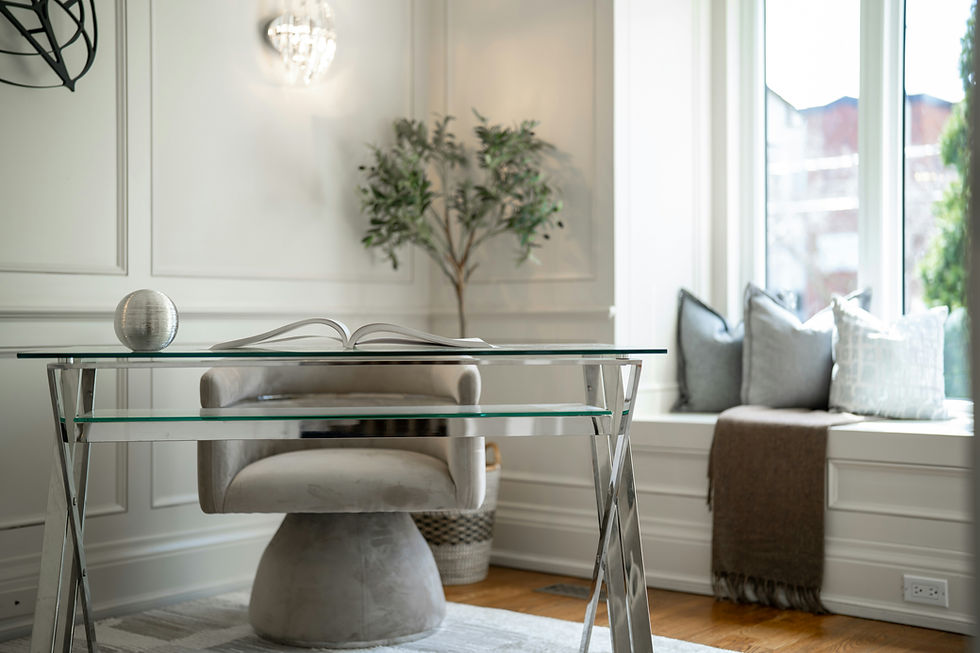
I’ve written about chrome myself, and I can appreciate why designers are interested in it again, even if it still reminds me a little too much of the eighties. But what fascinates me is how quickly something moves from being an interesting alternative to something everyone apparently needs to consider. A trend can barely establish itself before we’re already looking for its replacement.
And then there’s the language surrounding it. Colours are suddenly everywhere, particular furniture styles are declared essential, and finishes that were perfectly fashionable last year are now supposedly dated.
It’s an endless cycle of discovering, adopting and abandoning things. I sometimes wonder how anyone manages to complete a renovation before the internet has changed its mind about half the materials they’ve chosen.

Seasonal Decorating Has Become an Olympic Event
I enjoy decorating for the seasons, particularly when it involves making the house feel a little different as the weather changes. But the scale of seasonal decorating on social media has become quite something. Autumn seems to arrive sometime in August, Christmas starts before Halloween has finished, and by the time you’ve packed away the decorations, somebody is already introducing their spring collection.
And it’s not just a matter of putting out a few seasonal accessories anymore. Entire rooms are restyled, colour schemes are changed, and every available surface gets its own carefully considered arrangement.
I’ve seen autumn decorating videos involving more pumpkins than I’ve encountered in an actual pumpkin patch. Some of the results are absolutely beautiful, but I do wonder how much storage these people have. There must be entire garages dedicated to decorative gourds.

What makes it competitive isn’t necessarily the amount of decorating, though. It’s the timing. Being the first to reveal your Christmas decorations, the first to introduce the new seasonal colour palette or the first to share an autumn styling reel seems to carry its own little reward. By the time the rest of us are actually thinking about Christmas, some accounts have already moved on to planning their next seasonal transformation.
And of course, the brands are delighted. Every season brings new collections, new colours and new reasons to replace things that were perfectly lovely twelve months ago. I enjoy discovering new products as much as anyone, but the pressure to constantly refresh everything can become rather absurd particularly when last year’s decorations are apparently no longer quite the right shade of green.
The Race to Own the Next Must-Have Piece
Furniture has always had its fashionable moments, and certain designs have been desirable for decades. But social media has added an interesting new dimension to the way particular pieces become popular.
A chair appears in a beautiful interior, a few influential accounts feature it, and suddenly it seems to be everywhere. What started as an unusual design choice quickly becomes something people recognise, want and, eventually, complain about seeing too often.
The same happens with lighting, artwork and accessories. There’s an almost predictable progression from discovering something interesting to seeing it repeatedly, followed by people declaring themselves thoroughly tired of it.
Sometimes the entire process seems to happen within a matter of months. Which is rather unfortunate if you’ve just spent a considerable amount of money on the thing everyone has suddenly decided is overexposed.
I find this especially interesting with iconic furniture. Some designs have remained relevant for generations, yet social media can make them feel temporarily fashionable simply because they’re appearing everywhere.

A chair that has existed for seventy years becomes the latest must-have piece, only to be dismissed as overdone once enough people have bought one. The furniture hasn’t changed, and neither has the quality of the design. We’ve just become bored of looking at it.
When Everyone Wants to Be Different, Why Does Everything Look the Same?
Once enough people have adopted a particular look, it no longer feels quite as special.
There’s a wonderful contradiction in the way we approach interiors online. Everyone wants something original, something unexpected and preferably something nobody else has. Yet the moment a particular style becomes popular, we see endless variations of essentially the same idea. The same furniture shapes, the same colours, the same styling tricks, often accompanied by captions explaining how individual the result is.
I don’t think there’s anything wrong with being influenced by other people’s work. Design has always involved borrowing ideas, revisiting older styles and finding new ways to combine familiar elements. But I do find it amusing how quickly something described as a bold, individual choice can become the safest possible option because everyone else is doing it.
And perhaps that’s partly why the competition keeps moving. Once enough people have adopted a particular look, it no longer feels quite as special. So the search begins for something newer, more unusual or more exclusive. The irony is that the harder everyone tries to stay ahead of the trends, the more predictable the whole process becomes.

Even Interior Designers Aren’t Above It
I’d love to claim that interior designers are entirely immune to this, but that would be a bit ridiculous. We spend our time looking at new collections, visiting showrooms, discovering materials and keeping an eye on what other designers are doing. Of course, we get excited about something new. And yes, there’s a certain satisfaction in finding a wonderful product before it starts appearing everywhere.
Social media has also made being current part of how designers present themselves. Sharing the latest trends, introducing new products and demonstrating an awareness of what’s happening in the industry can all help establish credibility. But I sometimes wonder whether we’re putting too much emphasis on being ahead of the curve rather than simply doing interesting work.
After all, a good interior doesn’t become less successful because somebody else has discovered the same wallpaper. Nor does a designer suddenly become more talented because they were the first to use a particular colour.
The skill lies in knowing what to do with those things, how to combine them and whether they make sense in the home you’re designing. Being first might get you attention on Instagram, but it doesn’t necessarily make you a better designer.

Perhaps We Could All Stop Trying to Win
I have no intention of giving up my interest in trends, new collections or beautiful furniture. I enjoy all of it far too much, and I still get excited when I discover something genuinely different. I also don’t think there’s anything wrong with wanting to be ahead of a trend, particularly when you’re working in a creative industry. Discovering new ideas is part of the fun.
But I do find the competitive side of it increasingly entertaining. The rush to be first, the declarations that something is already outdated, the seasonal reveals that seem to happen earlier every year and the desperate search for the next thing nobody else has yet. It all feels like an enormous amount of effort to stay one step ahead of people who are probably doing exactly the same thing.

And the funniest part is that some of the most interesting interiors I’ve seen contain things that have been around for decades. Beautiful antiques, iconic furniture, unusual combinations and pieces that weren’t chosen because they were fashionable at the time. They weren’t necessarily first, newest or particularly on trend. They were simply good choices.
I’ll continue enjoying the latest collections and occasionally falling for something fashionable. But I’m not particularly interested in racing anyone to the checkout. If I discover a fabulous lamp six months after everyone else, I’ll happily buy it anyway. Although I might have to resist mentioning that I liked it before it became popular.


